
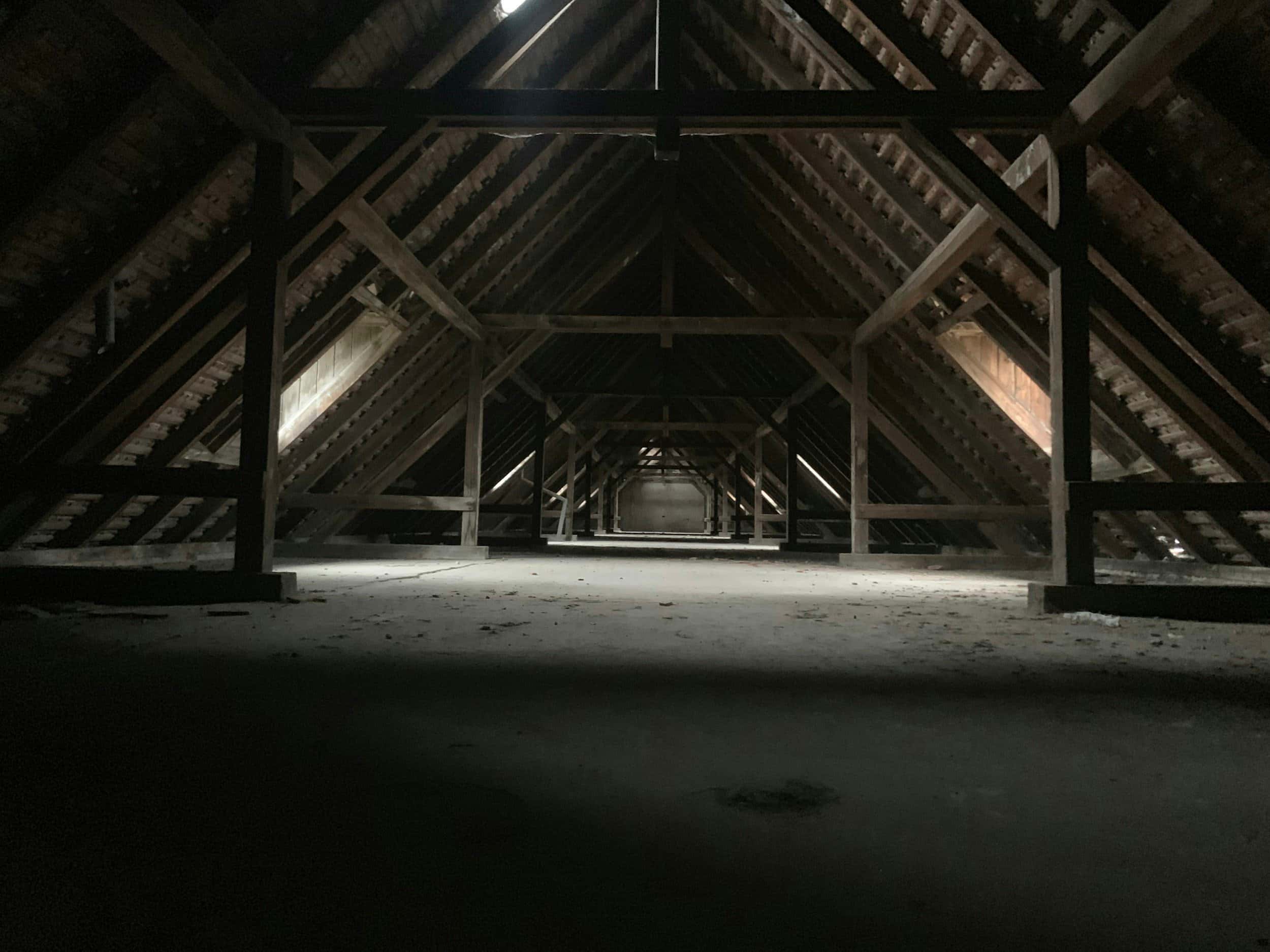
Attic mold is extremely common in Michigan, and winter is when most of it starts. Homeowners are often surprised to find dark staining across the roof sheathing in a house with no roof leak at all. The cause is usually moisture from inside the home — and an attic that cannot get rid of it.
Warm, Moist Air Meets a Cold Roof
Everyday living puts moisture into the air: showers, cooking, laundry, even breathing. Warm indoor air rises, and wherever it can leak into the attic — around light fixtures, the attic hatch, plumbing and wiring penetrations — it carries that moisture with it.
In a Michigan winter, the roof sheathing is cold. When warm, moist air reaches it, the moisture condenses or freezes as frost. When temperatures rise, the frost melts and the wood stays damp — exactly the conditions mold needs.
The Four Most Common Causes
- Inadequate or improper ventilation: Without enough intake and exhaust, moist air has nowhere to go.
- Roof or flashing leaks: Existing or past leaks wet the sheathing directly.
- Improperly exhausted fans: Bathroom fans and dryer vents that empty into the attic instead of outdoors pump moisture straight in.
- Attic bypasses and air leaks: Gaps between the living space and the attic let warm, humid air flow upward.
Why Attic Ventilation Matters
A well-ventilated attic draws cold, dry outside air in at the soffits and lets warmer, moister air out near the ridge. When soffit vents are blocked by insulation, or there is too little vent area for the size of the attic, moisture builds up instead.
A common rule of thumb calls for 1 square foot of net free vent area for every 150 square feet of attic floor, and Michigan Mold Services recommends that 1/150 ratio for attics with evidence of mold. Ventilation also has to be balanced between intake and exhaust — simply adding vents in the wrong places can make things worse.
Ice Dams and Attic Moisture
Ice dams form when heat escaping into the attic melts snow on the roof, and the water refreezes at the colder eaves. Water can then back up under the shingles and leak into the attic. An ice dam is a symptom worth taking seriously: it usually points to the same heat loss and ventilation problems that cause attic condensation.
Signs of Attic Mold
- Dark or black staining on the roof sheathing, often worst on the colder, north-facing side
- Frost on the sheathing or on nail tips during cold weather
- Nails that drip or have rust stains around them
- Damp, matted or compressed insulation
- A musty smell on the upper floor
- Water stains on ceilings below the attic
How to Prevent Winter Attic Mold
- Seal air leaks between the living space and the attic
- Keep soffit vents clear, using baffles where insulation could block them
- Make sure ventilation is adequate and balanced for the attic’s size
- Vent bathroom fans and dryers to the outdoors, never into the attic
- Keep indoor humidity in check during the heating season
- Have roof and flashing leaks repaired promptly
When to Call a Professional
If you are seeing staining, frost or a musty smell, the mold and its cause need to be addressed together. Michigan Mold Services inspects attic intake vents for blockage, calculates the recommended venting, and checks for roof leaks and improperly vented fans. Learn about attic mold remediation in Michigan, or see our work on attic mold remediation in West Bloomfield.